

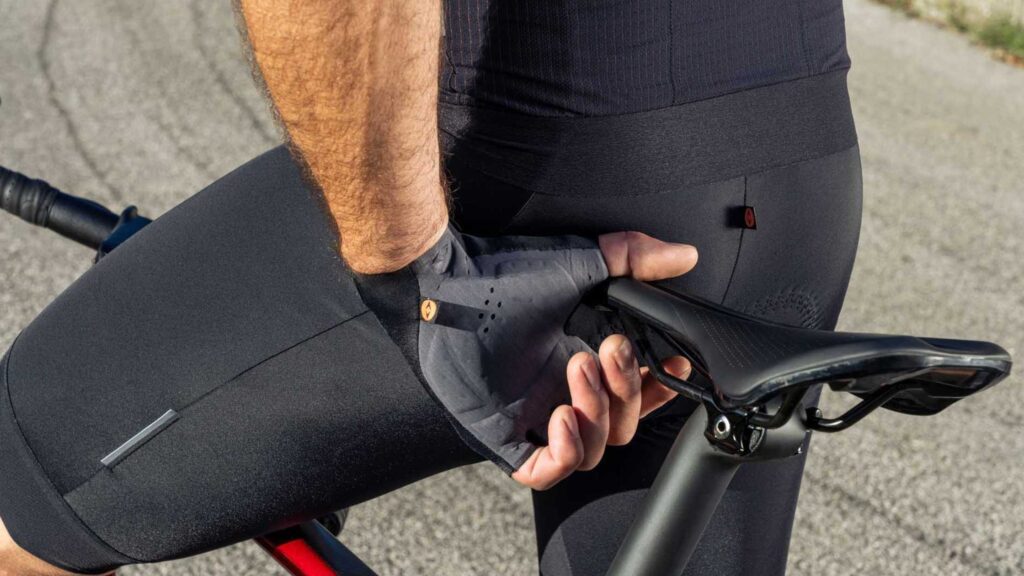
Routes are often the same.
Bodies are not.
Most cycling rides happen on everyday routes: short distances, familiar roads, repeated patterns. Because they feel ordinary, they are often underestimated.
Yet from a biomechanical perspective, even short, routine rides generate complex loads, localized pressure, and continuous micro-stress.
At Elastic Interface®, we start from this insight to reverse the narrative:
when routes are basic, engineering must be advanced.
This is the foundation of our approach to engineering comfort for everyday rides — designing cycling interfaces that perform consistently, day after day, not only in extreme conditions.
Density is not softness: it is functional architecture
Comfort is often mistaken for softness.
In reality, density is design.
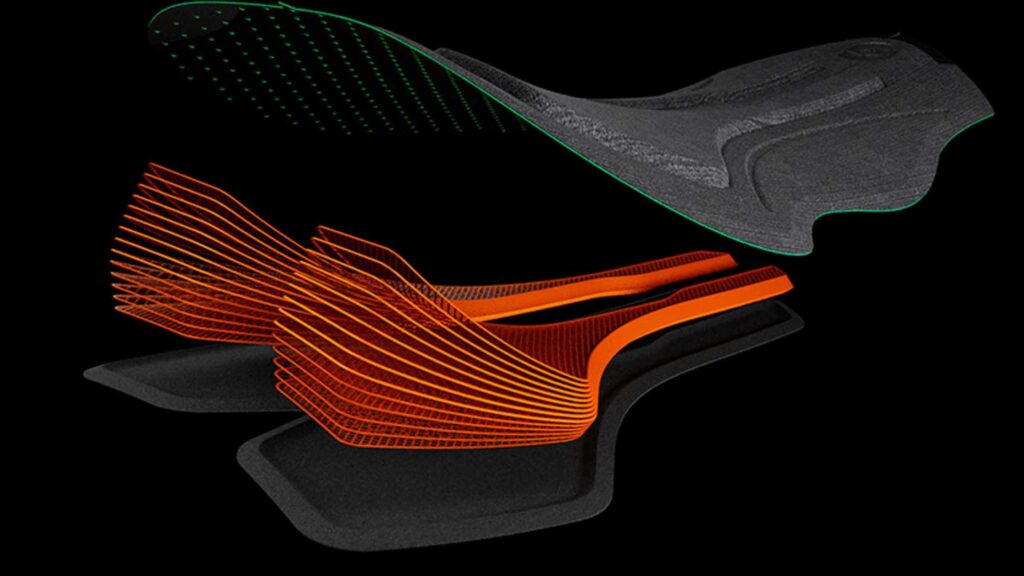
Even on short rides, rider weight concentrates on specific saddle contact points: sit bones, perineal area, pressure peaks created by posture and pedaling mechanics. Without engineered density management, comfort quickly degrades into instability and fatigue.
Elastic Interface® develops multi-density pad constructions designed to:
- support peak pressure zones with high-density inserts
- distribute load without collapsing
- ensure progressive transitions to reduce bulk and pressure edges
- align support zones with road-specific riding angles
The result is consistent support and controlled positioning, making even everyday routes feel efficient and stable.
Stability is not accidental: it starts from anatomy
Comfort is not just a sensation.
It is a condition of stability.
A cycling pad that shifts, folds, or compresses unevenly forces constant micro-adjustments in the saddle. This increases friction, wastes energy, and accelerates fatigue.
This is why stability is not accidental: it is designed.
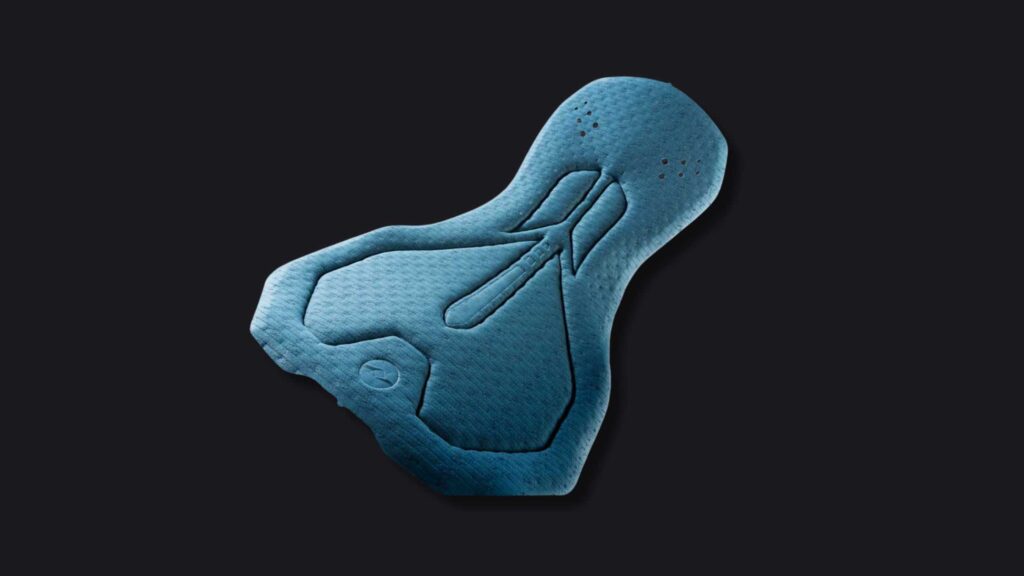
That’s why Elastic Interface® designs cycling pads starting from:
- anthropometric research
- real riding positions
- anatomic, pre-shaped constructions
- gender-specific designs
- engineered relief and support zones
When the body–saddle interface remains exactly where it should be, pedaling becomes natural and efficient.
Stability disappears from perception — performance takes over.
Breathability is not a material. It is a system.
Heat and moisture do not wait for long distances.
They build up quickly — even on short rides.
That’s why breathability cannot rely on a single fabric. At Elastic Interface®, we treat it as a multi-layer performance system.
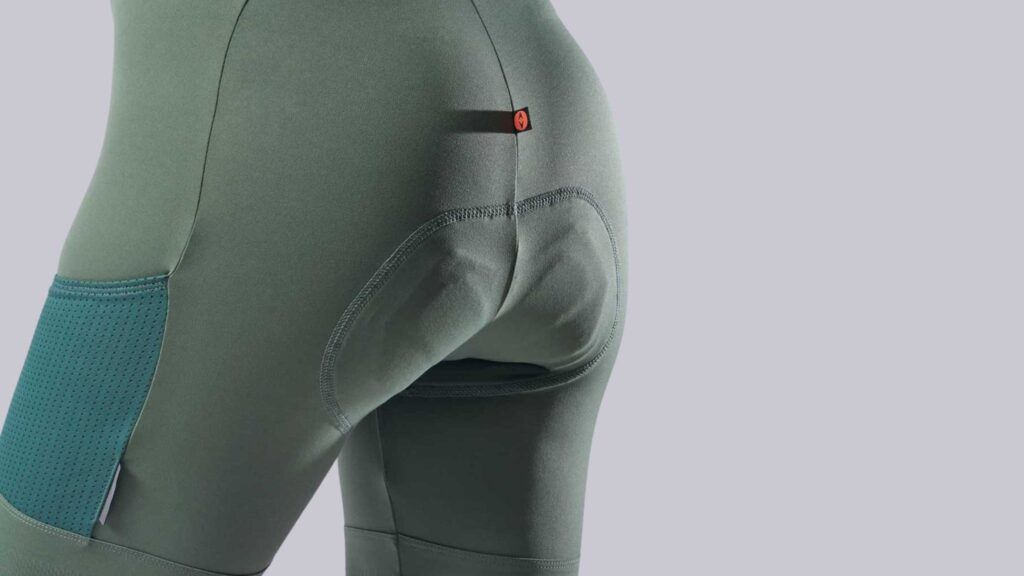
Effective moisture management combines:
- perforated, breathable top fabrics
- open-cell and reticulated foams for faster drying
- reduced lamination to limit heat retention
- air-mapping aligned with high-sweat zones
The outcome is lower skin temperature, reduced friction, and a consistently dry feeling.
Comfort that performs before discomfort appears.
Real comfort is measured over time
Comfort is not defined at kilometer one.
It is defined after weeks, months, and repeated rides.
A cycling pad that loses shape loses protection.
That’s why elastic memory and material durability are essential components of comfort engineering.
Elastic Interface® solutions are designed to withstand:
- repeated compression cycles
- sustained pressure and friction
- prolonged friction
- daily use over long periods
High-resilience foams, compression-resistant structures, and balanced thickness-to-support ratios ensure that pads recover their shape and maintain performance over time.
Durability is not a bonus feature.
It is a design requirement — for rider well-being and long-term reliability.
Routes are basic. Engineering is not.
Everyday rides may not be epic.
But the body is always complex.

That’s why Elastic Interface® positions itself as a comfort engineering authority and technology partner, not just a component supplier. Our approach transforms ordinary rides into consistent performance through science-driven design, advanced materials, and long-term vision.
Because even the most basic routes deserve engineered comfort.
Every single day.
Curious to experience what engineered comfort really means on everyday rides?
Explore the world of Elastic Interface®.