

When cyclists walk into a bike shop, they are often looking for answers before they are looking for products.
They may want a bib short that feels more comfortable on long rides. They may be dealing with pressure points, chafing, overheating, or saddle discomfort. Or they may simply be trying to understand why one chamois feels completely different from another.
That is why retail training matters.
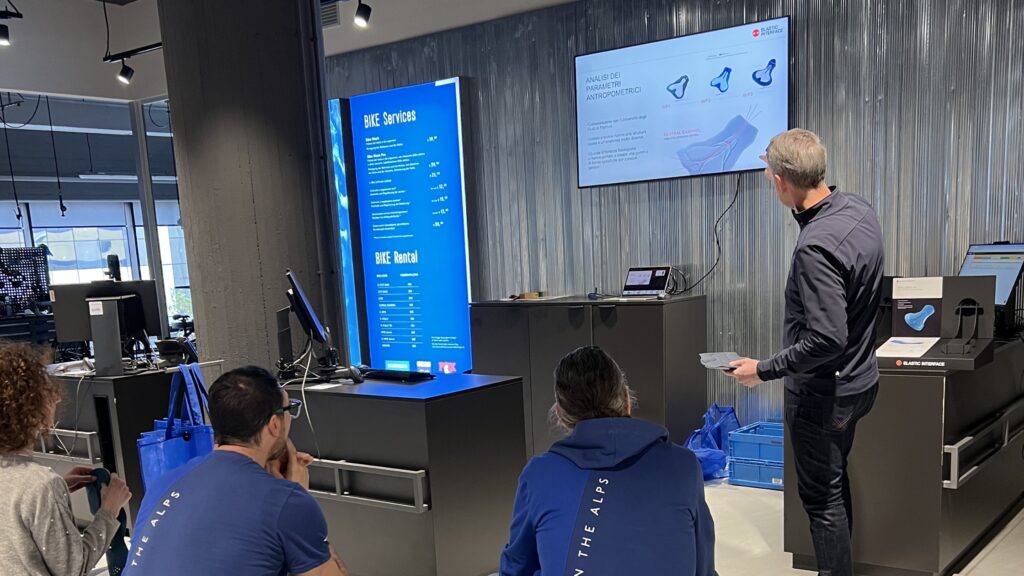
In March, Elastic Interface met with the sales teams of the three SPORTLER Bike stores in Carugate, Peschiera, and Bolzano for a series of product training sessions focused on cycling comfort, chamois technology, and riders’ needs.
The sessions also focused on the chamois featured in Jëuf cycling apparel, a brand that, from the very beginning, chose Elastic Interface as its technology partner to elevate the comfort, performance, and quality of its bib shorts and bib tights.
The experience confirmed something we strongly believe in: when retail teams are equipped with the right knowledge, the final consumer benefits immediately.
Helping retailers explain what really makes a difference.
For many riders, the cycling pad is still the least visible but most important part of a pair of bib shorts.
At Elastic Interface, we have always worked to change that perspective. Comfort on the bike depends on what happens at the contact points between rider and bike, and the pad plays a decisive role in protection, breathability, stability, and overall riding experience.
Our approach to chamois development is built around anatomy, target use, and performance needs. Different riders, disciplines, and body structures require different solutions, which is why Elastic Interface develops discipline-specific and anatomy-driven designs rather than one generic answer for everyone.
Training retail teams means helping them translate this technical knowledge into clear, useful guidance for riders.
From product features to real rider benefits.
During the sessions, SPORTLER teams also had the opportunity to explore how brands like Jëuf integrate Elastic Interface technologies into their performance collections, transforming ergonomic research, anatomical construction, and material innovation into a real riding experience for the final consumer.
Elastic Interface was the first company to introduce stretch into the cycling pad, helping redefine comfort standards in the category. Since then, our work has continued through advanced materials, anatomic constructions, breathable top-sheet solutions, and technologies developed to improve fit, moisture management, support, and freedom of movement.
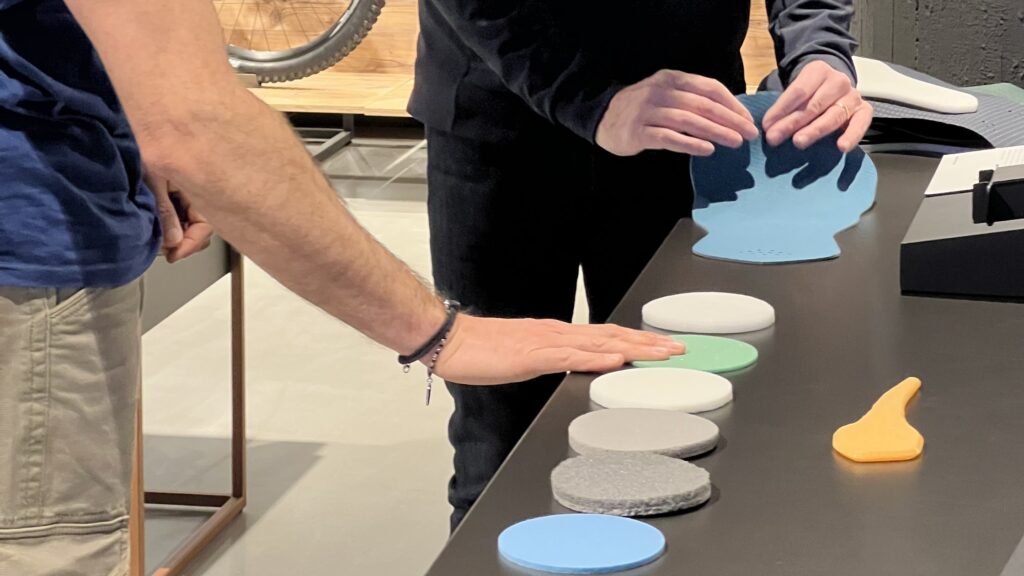
For a cyclist, this translates into something very concrete:
- more comfort
- better stability in the saddle
- improved moisture control
- more confidence during the ride
For a retail salesperson, it means being able to answer a key question with confidence: how do I help this rider choose the right solution?
Listening to the people who speak with cyclists every day.
One of the most valuable parts of retail training is the exchange.
Store teams are in direct contact with riders every day. They hear recurring questions. They understand common doubts. They know what cyclists ask for most often, whether they are passionate enthusiasts, beginners, or experienced professionals.
This kind of dialogue is extremely important to Elastic Interface because innovation is never only about designing advanced products. It is also about understanding how those products are perceived, explained, and chosen in the real world.
Our brand has always combined technical innovation with a partnership-driven approach, building long-term collaborations through shared expertise, customization, and market understanding.
Retail training is part of that philosophy: it strengthens the connection between product development, brand storytelling, and the actual needs of cyclists.
Why this matters for the final consumer.
For the final user, better retail education leads to a better purchasing experience.
A well-trained salesperson can help riders understand:
- why comfort is not only about pad thickness
- why density and positioning matter
- why breathability affects skin comfort
- why different disciplines require different pad constructions
This is especially important in cycling, where the wrong choice can affect not only enjoyment, but also posture, stability, and long-term comfort in the saddle.
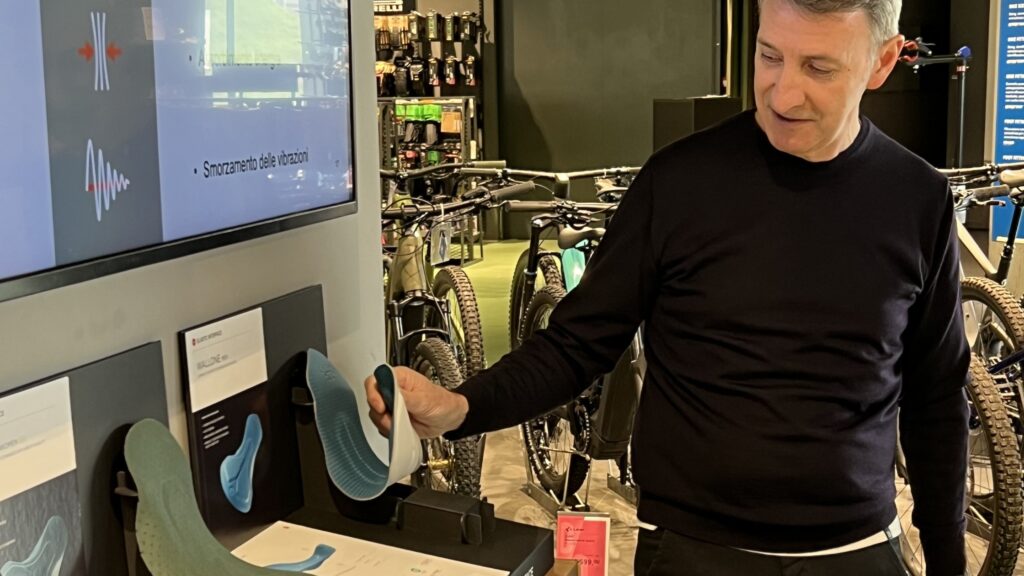
When consumers receive clearer guidance at the point of sale, they are more likely to choose products that truly match their riding style and expectations.
Training as part of brand growth.
For Elastic Interface, retail training also supports brand growth in a meaningful way.
It helps make innovation easier to understand. It improves product storytelling at the point of sale. It gives retail teams the tools to communicate the value behind our technologies. And it creates a feedback loop that helps us stay connected to the evolving needs of the cycling community.
This is fully aligned with how Elastic Interface sees its role in the market: not only as a product innovator, but as a trusted partner that creates value from concept to market success through collaboration, expertise, and consumer insight.
Our March meetings with SPORTLER were a reminder of exactly that. Training is not just about sharing information. It is about building stronger connections between brands, retailers, and riders – and ultimately improving every ride through better understanding. Combined with durability and consistent performance, this helps make the product lifecycle more efficient overall.
Comfort starts with knowledge. Learn more about the technology behind Elastic Interface chamois and see how advanced design supports every cyclist’s ride.